
Tiny Space DIY is my attempt at a fully automated blog. It’s a home and lifestyle site for people living in small apartments on small budgets: storage hacks, renter-friendly makeovers, compact furniture ideas and seasonal refreshes that don’t need a landlord’s permission or a big spend.
Building the site
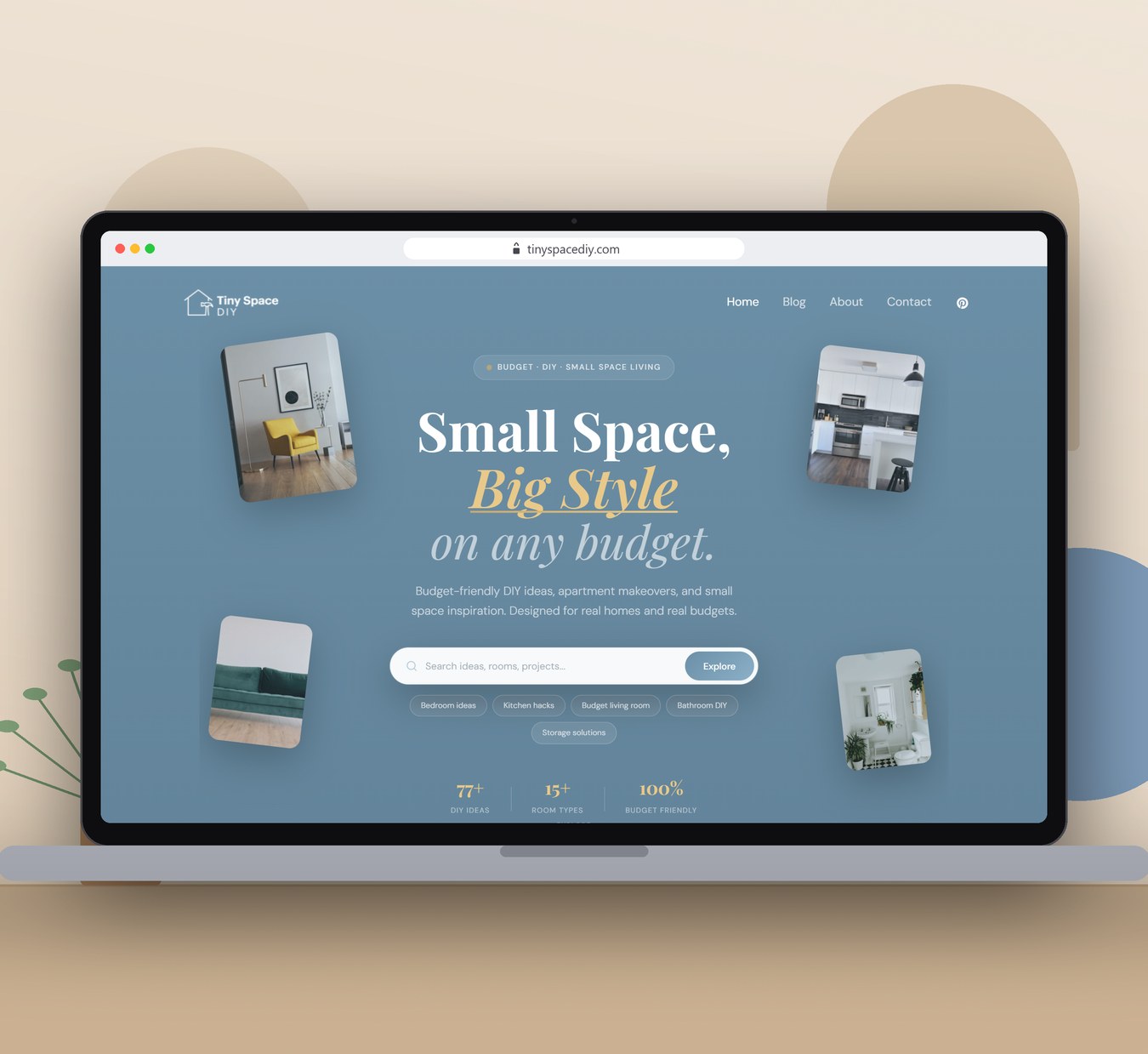
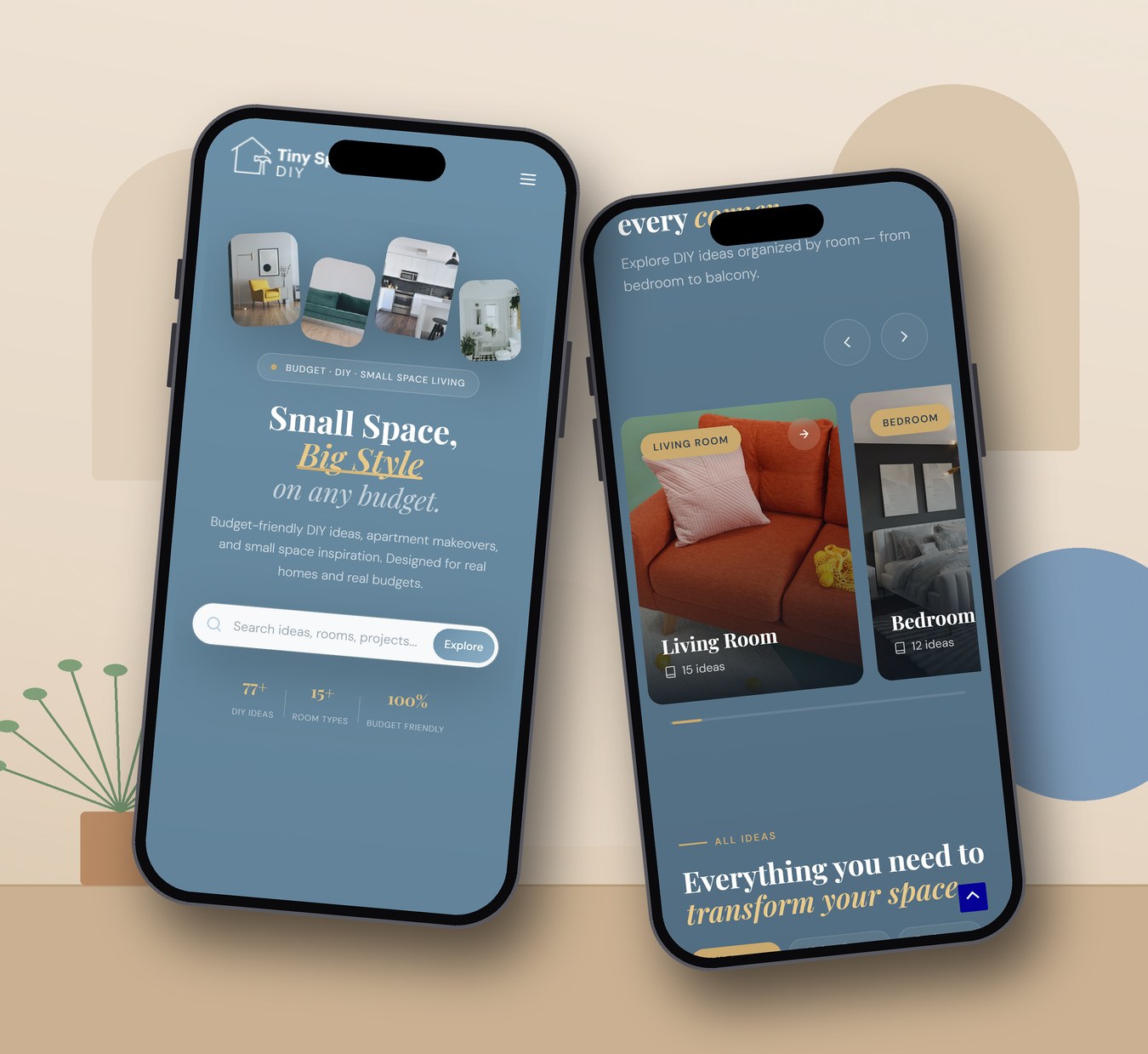
I built the whole site myself on WordPress with Astra and Elementor, and gave it its own look instead of a stock blog template. Before publishing anything I researched what tends to rank well, and spent a lot of time on Pinterest seeing which small-space ideas people save again and again. The homepage is shaped around that: a big search bar up front, quick links to the most popular topics, a Latest Ideas feed and a Browse by Room section covering the living room, bedroom, kitchen, bathroom, home office, balcony, storage, DIY furniture, seasonal decor and a first apartment guide.
AI-made content
Every article is written by Claude Sonnet, and every image is generated with Nano Banana or Ideogram. Between April and June 2026 the library grew to 77 published ideas, with posts on things like butter yellow kitchens, pegboard walls for tiny kitchens and statement bathroom lighting under $80. Google Site Kit is connected so I can see what’s being found in search and what people actually read.
Where it’s heading
The next step is an n8n workflow that runs the whole thing on its own. It’s a work in progress, and the plan looks like this:
- GPT picks a fresh topic that the site hasn’t covered yet and writes the image prompts for it.
- Claude Sonnet writes the article.
- Nano Banana or Ideogram generates the images.
- The finished post goes live on WordPress through the WordPress REST API.
- A pin goes out to Pinterest through the Pinterest API, which is still waiting on access approval.
Tech stack
WordPress, Astra and Elementor for the site, Google Site Kit for search and traffic insights, Claude Sonnet for writing, Nano Banana and Ideogram for images, GPT for topic and prompt planning, and n8n to tie it all together.