
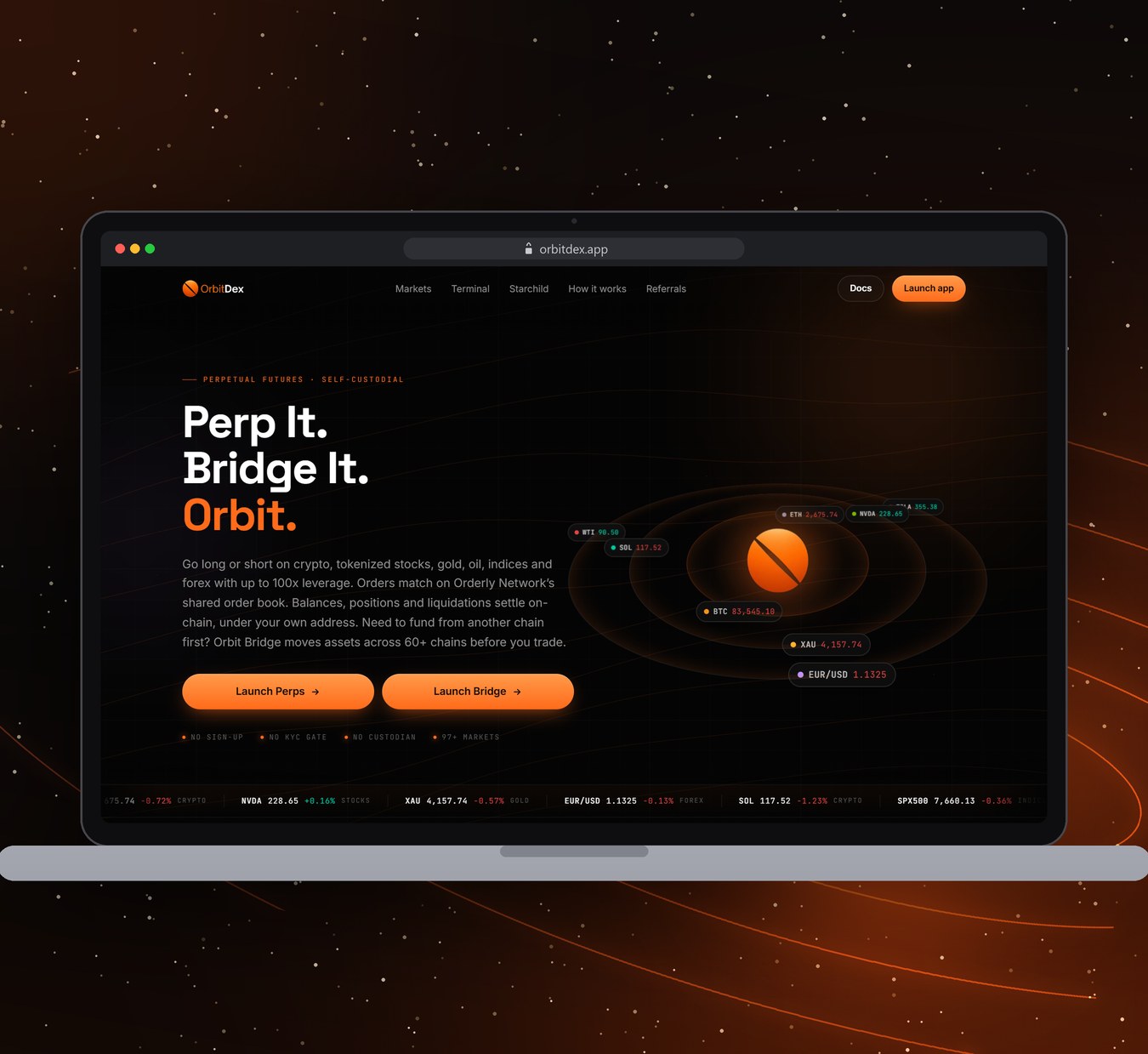
OrbitDEX is a self-custodial perpetual futures exchange, built by a small team. Traders connect a wallet and go long or short on crypto, tokenized stocks, gold, oil, indices and forex with up to 100x leverage, all from a single USDC balance. There’s no sign-up form, no KYC gate and no custodian holding the money.
My part
I built the frontend. The team had the Orbit idea, and my job was to make every screen feel like it belongs to it, from the landing page to the trading terminal itself. I also make OrbitDEX’s social media content and videos, so what people see on X and Telegram matches the app they land in.
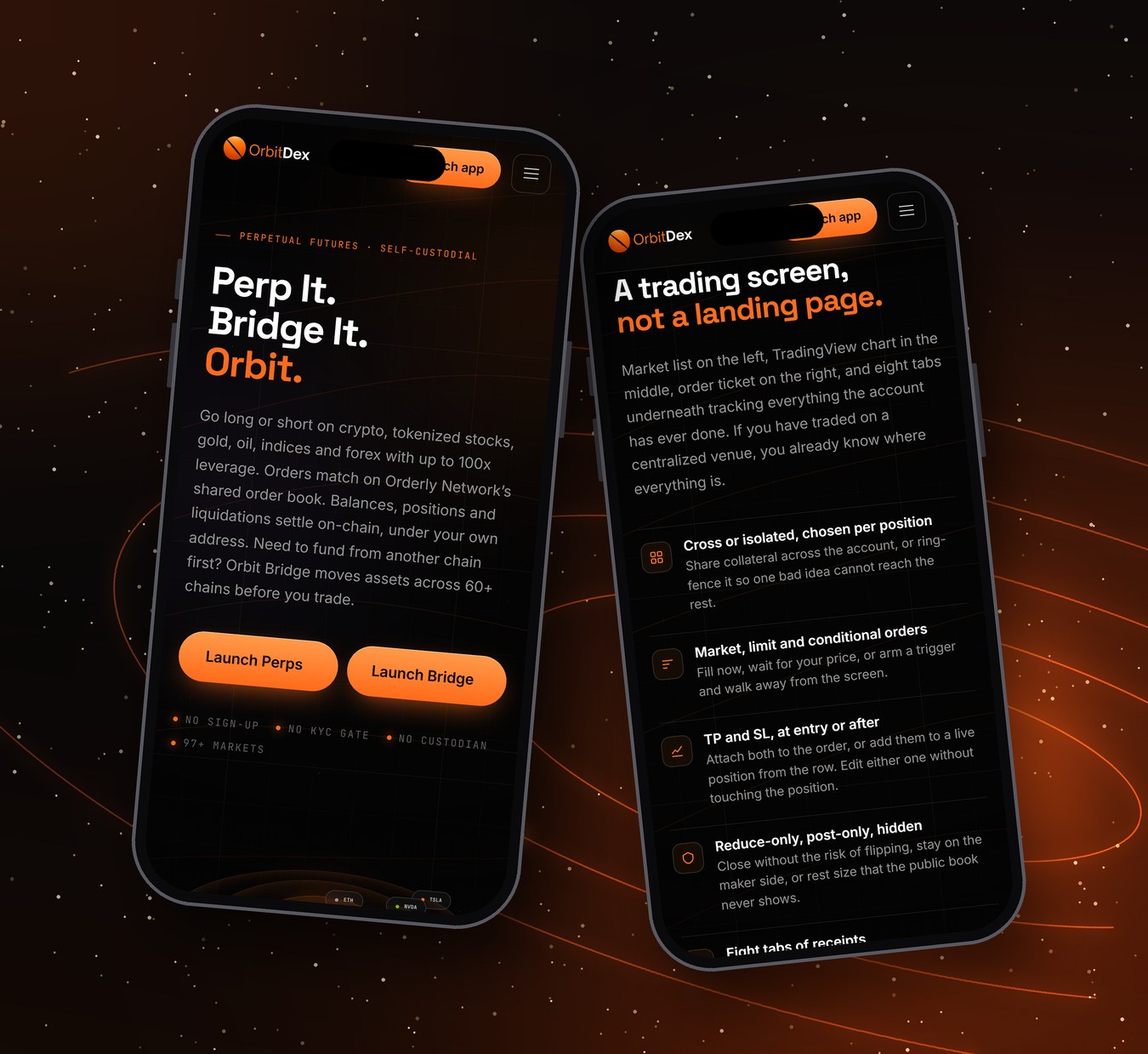
I wanted the terminal to feel like a real trading screen, not a landing page with a button on it. The market list sits on the left, a TradingView chart in the middle and the order ticket on the right. It handles market, limit and conditional orders, take profit and stop loss, cross or isolated margin, and eight tabs underneath keep track of positions, orders, fills and liquidations. A separate Charts tab runs four TradingView panes side by side, and your layout is still there after a refresh.
Behind the interface, orders match on Orderly Network’s shared order book, so even thinner markets have real depth. An Aggregator tab powered by LI.FI lets traders arrive with whatever they already hold on 30+ chains, and Orbit Bridge moves assets across 60+ chains.
Tech stack
The trading app is React, built with Vite, with Orderly Network for the order book and on-chain settlement, LI.FI for cross-chain swaps and TradingView for the charts. The landing page is hand-written HTML, CSS and vanilla JavaScript, which keeps it light and fast.